 Garantía de precio más bajo
 Envío gratuito a todo el mundo


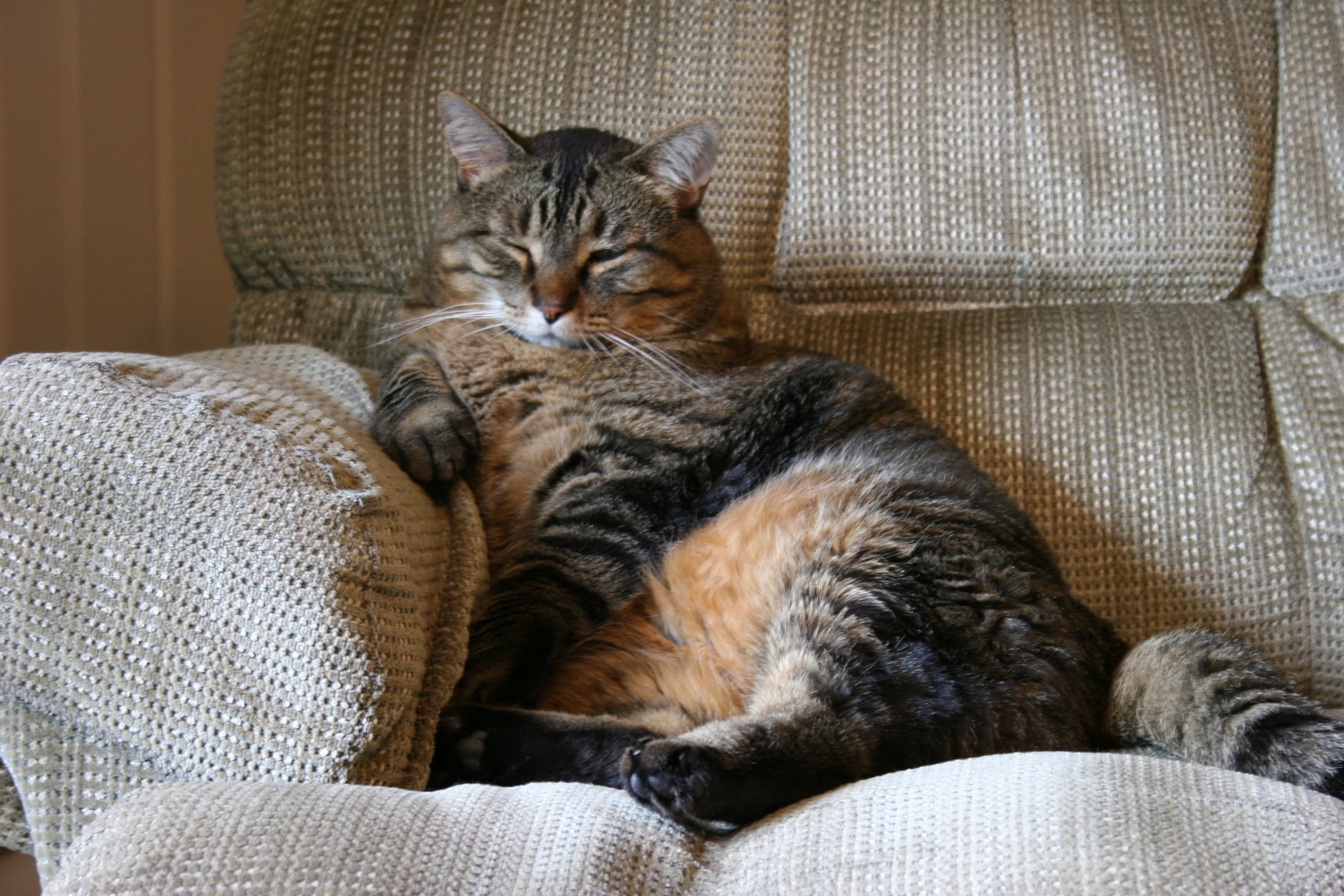
Por qué engordan los gatos
Los gatos llevan una vida muy diferente a la de sus ancestros. La mayoría pasa gran parte de su vida en interiores con pocas oportunidades para hacer ejercicio físico. Ya no tienen que acechar a sus presas para conseguir su cena, y muchos gatos se alimentan a demanda, con comida disponible durante todo el día. Además, algunos tipos de alimento para gatos pueden ser ricos en carbohidratos, un componente que los gatos no pueden metabolizar fácilmente. Los carbohidratos se almacenan como grasa y provocan un aumento progresivo de peso.
Problemas de la obesidad
Desafortunadamente, la obesidad se convierte en un problema circular. El aumento de peso genera más apetito, lo que lleva a comer más. El exceso de peso también conlleva menos ejercicio, lo que contribuye a mantener el sobrepeso en los gatos. La obesidad en los gatos está relacionada con un mayor riesgo de enfermedades cardíacas, artritis y diabetes. El peso extra ejerce más presión sobre las articulaciones sensibles a medida que los gatos envejecen, además de hacer trabajar más al corazón y al sistema vascular. La diabetes en gatos es un problema creciente que puede causar enfermedades renales y una muerte prematura para tu mascota. Mantener un peso saludable te garantizará disfrutar de la compañía de tu gato durante muchos años.
Intervención temprana
Controlar pequeños problemas de peso es mucho más fácil que lograr que tu gato pierda una gran cantidad de kilos. En cuanto notes un poco de redondez en la barriguita de tu gato, adopta un enfoque proactivo para la pérdida de peso y garantiza la buena salud continua de tu mascota. Averigua qué contiene el alimento habitual de tu gato y considera cambiar a una marca y tipo diferente. Presta atención a con qué frecuencia come el gato y cuántas veces le das premios. Observa el nivel de actividad de tu gato durante el día. Piensa en cómo puedes hacer que tu gato sea más activo. A veces, otro gato puede proporcionar la estimulación mental y física necesaria para mantenerlo en movimiento. Como siempre, habla con tu veterinario sobre las mejores formas de controlar el peso de tu gato.
Las visitas veterinarias regulares permitirán a tu veterinario hacer un seguimiento del peso de tu gato a lo largo del tiempo, lo que puede ayudarte a detectar problemas de peso antes de que sean más difíciles de manejar. Tu veterinario también puede aconsejarte sobre las mejores formas de limitar la alimentación para garantizar que tu gato reciba la mejor nutrición mientras controla la ingesta de calorías. También puede recomendarte alimentos bajos en calorías o específicos para las necesidades de salud particulares de tu gato.
Formas de mantener a tu gato en forma
· Alimenta a tu gato en horarios específicos del día y en la cantidad recomendada por tu veterinario. Evita dejar comida seca disponible para que coma continuamente.
· Elige un alimento de alta calidad que ofrezca un 45% de proteínas, un 40% de grasas y solo una pequeña cantidad de carbohidratos para proporcionar la mejor nutrición para las necesidades del gato promedio.
· Evita dar premios a tu gato, ya que son bajos en nutrición y altos en calorías.
· Asegúrate de que tu gato haga ejercicio diario con un árbol rascador, juguetes para perseguir y otros accesorios. Interactúa con tu gato para jugar a diario.
· Visita al veterinario regularmente para las vacunas y una revisión general de la salud de tu gato.
Crédito de la imagen destacada

Comentarios(4)
I'm just curious why there is not a surgical intervention for cats who are obese. My 4 year old cat is otherwise healthy, but FAT. I have other cats who cannot eat on a feeding schedule because they are older and won't get enough and just really couldn't get with the program. With technology for everything else, I find it disheartening that there is not lap band surgery for cats. If obesity is such a problem, why is this not being researched? My vet just did surgery on a guinea pig and a bird in the same day, but there isn't an option for obesity surgery? Sad.
A cat should never have to have surgery. We are their caretakers and in charge. If your fat cat needs a feeding schedule, you need to make the effort. Buy a high-quality, reduced calorie wet food and feed the cat 1/2 can, twice/daily. NO TREATS! NO KIBBLE! Get the cat moving...play chase, hide-n-seek, get a doggie staircase and chase the cat up and down... Lap band surgery for a cat is unneeded if we all stick to the schedule. Feed the older cats separately if need be in a different room, but watch the fattie so he/she doesn't swipe their food.
I had always left a full bowl of food for my cats to eat at will. Unfortunately my cat Mathilda became 23 lbs. over the years while the other cats stayed at a healthy weight. My oldest two cats ("my boys") both passed a year apart in the last few years. So I'm left with my fattie and my Mom's cat (whom I inherited 3 years ago). I figured it was time to intervene on behalf of Mathilda's health. Though I had tried a few times, half heartedly I admit. This time the vet said to give her 1/4 cup twice a day. Whatever she doesn't eat in 20 minutes take away. I have to feed Bonnie on the kitchen table where Mathilda can't jump. Which works out perfectly. It's been 1 1/2 years and she's gone from 23 lbs to 18 lbs. I now feed her 1/8th cup, four times a day. She seems to feel she's getting more that way :') Oh and we use Blue Wilderness, Grain Free, Weight Control Formula (both the cats love it). Good luck. It's a commitment, but it's worth it.
I have an almost 1 year old cat tortie that is tipping the scales at 12.8 lbs. Then my other cat who is almost 1 year as well at 8lbs. I took them in to the vet at 10 months where we got their weights, the vet said go ahead and put them on adult indoor formula, I have them on authority. 2 months later Krishna is still 12.8 lbs, however Chenoa went from 8.3lbs to 8lbs. How do I get one cat to lose weight while the other one to stay healthy and not lose weight while feeding them the same food?
Dejar un comentario